

What happened in the 2008 Freeway Complex Fire, and is Yorba Linda safer now?
The Freeway Complex Fire burned 30,305 acres and damaged or destroyed more than 300 homes in November 2008. Yorba Linda is safer now, with 28 evacuation zones, AlertOC alerts, and three heli-hydrants.
Your local Yorba Linda real estate agent explains what happened in the 2008 Freeway Complex Fire and what changed in Yorba Linda, CA, so you can judge the risk for yourself before you buy. If you are looking at a home in the hills here, this fire will come up. It should. It is the defining wildfire in Yorba Linda history, and the lessons from it shape how the city prepares today. I will give you the numbers first, then what went wrong, then what changed, so you can decide with facts instead of fear.
The 2008 Freeway Complex Fire at a glance
|
Fact |
Number |
|---|---|
|
Started |
November 15, 2008 |
|
Acres burned |
30,305 |
|
Homes damaged or destroyed |
More than 300 |
|
Santa Ana wind gusts |
50 to 60 miles per hour |
|
Chino Hills State Park burned |
About 90 percent |
|
Freeways closed |
91 and 57 |
|
Yorba Linda evacuation zones today |
28 |
|
Heli-hydrants in service today |
3 |
What Happened on November 15, 2008?
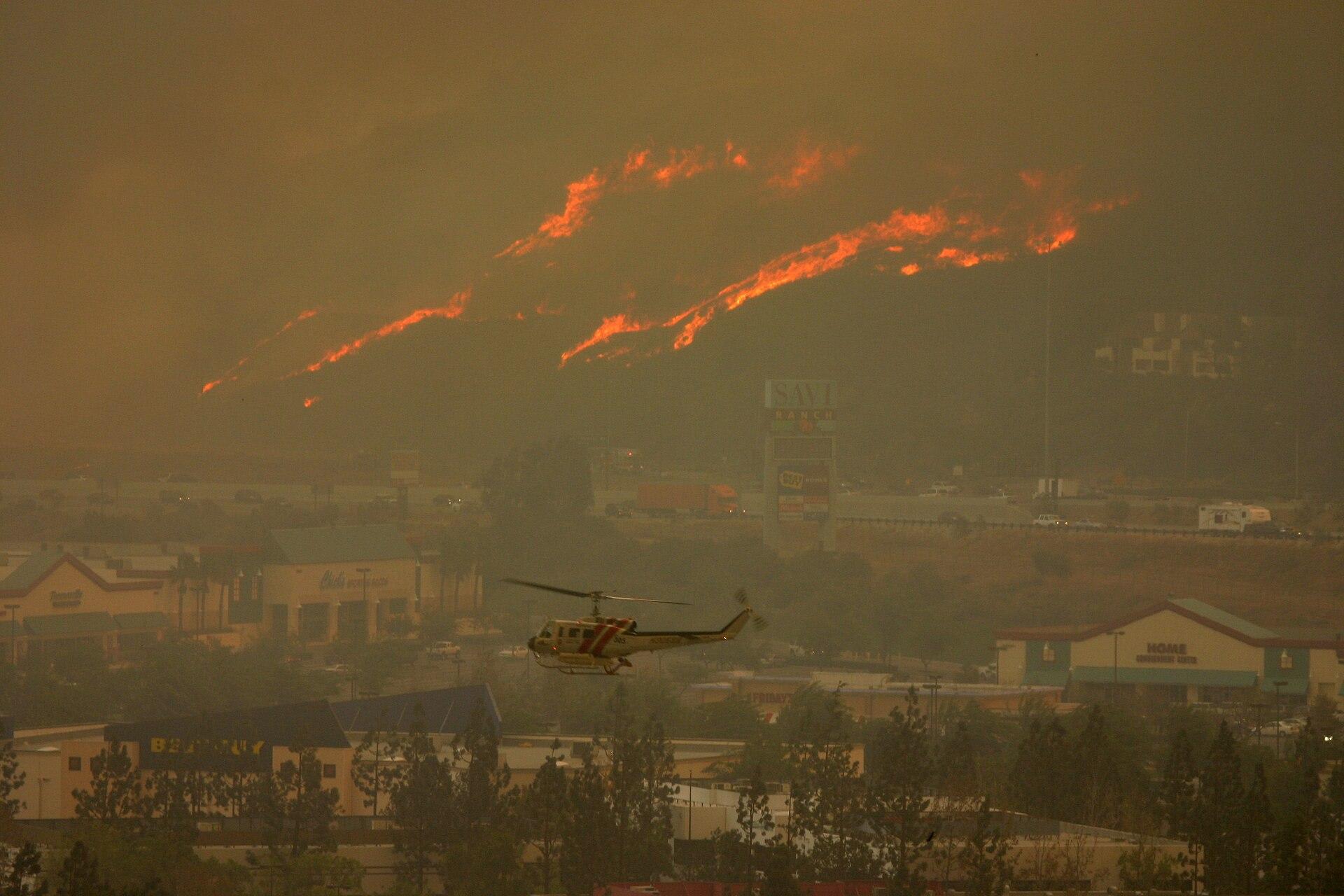
The Freeway Complex Fire started on November 15, 2008, during strong Santa Ana winds, and it remains the defining wildfire in Yorba Linda's history. It burned 30,305 acres across four counties and damaged or destroyed more than 300 homes, most of them in Yorba Linda. Winds of 50 to 60 miles per hour pushed the fire out of the Chino Hills and into hillside neighborhoods like Hidden Hills, Box Canyon, the Dorinda and San Antonio area, and Stonehaven. Both the 91 and 57 freeways closed at points during the fire. About 90 percent of Chino Hills State Park burned as well.
I remember that weekend. The hills were glowing red, and evacuation orders were reaching neighbors who lived nowhere near the hills. It was a scary time for the whole community. The east side took the worst of it, and Box Canyon was hit hard.
The fire moved fast. Two separate fires started that morning, one along the 91 freeway in the Santa Ana Riverbed and a second at a landfill, and they merged a day later into a single complex. Embers blew more than a mile ahead of the flames, which is how homes caught fire even when the main fire front had not reached their street. That is a pattern worth understanding if you are buying in the hills: in a wind-driven fire, embers, not flames, are what usually reach a house first.
Buyers ask about this fire for a good reason: they want to know if it could happen again and what has changed. The honest answer is that Santa Ana wind events still happen every fall and winter, and no city that borders wildland can promise zero risk. But Yorba Linda learned hard lessons in 2008, and the changes since then are real and specific. That is what the rest of this post covers.
What Went Wrong During the Fire?
Two failures from 2008 shaped almost everything that came after. First, water supply broke down where it was needed most. During the fire, a water booster pump station shut down from the heat, and water pressure dropped in parts of the hills, including Hidden Hills, leaving some hydrants dry while homes were burning. Firefighters had the trucks and the training, but in some streets they did not have the water. Second, evacuation routes became gridlocked. Thousands of people tried to leave at once on a small number of downhill roads, and traffic jammed while the fire advanced.
Those two problems, water and getting out, are the thread that connects the fire to every change I describe below. The city did not just add a program or two. It rebuilt how water reaches the hills in a fire, and it rebuilt how residents are told to leave and where they go. When you hear about a heli-hydrant or an evacuation zone in Yorba Linda, you are hearing the direct answer to a specific failure from November 15, 2008.
There is one more thing worth saying plainly. Many longtime residents chose to rebuild and stay after the fire because they love the views, trails, and quiet streets. They did not stay because they forgot what happened. They stayed because this is home, and they rebuilt with the lessons in mind. If you are considering one of those neighborhoods, you are joining people who made that same choice with their eyes open.
How Is Yorba Linda Better Prepared for Evacuation Now?
Since 2008, the City of Yorba Linda, the Orange County Fire Authority, and the Orange County Sheriff's Department have improved emergency alerts, evacuation planning, and mutual aid with nearby agencies. The city is now divided into 28 evacuation zones, each with named neighborhood exits, through its Know Your Way program. Residents can look up their zone by address and sign up for AlertOC to get emergency notices by text, call, or email.
Here is what that means for you in practical terms. Before you buy, you can look up the exact evacuation zone for an address and see its named exits on a map. You are not guessing which way to go. You can also sign up for AlertOC before you move in, so the alerts tied to your zone reach you by text, call, or email. The city sends zone-specific alerts, which means the message you get is about your neighborhood, not a county-wide blast.
The city also holds a free Wildfire Preparedness Community Meeting every year at the Yorba Linda Public Library, where local fire, sheriff, and emergency staff walk residents through home hardening, defensible space, emergency alerts, and how to use their evacuation routes so everyone knows their way out. I recommend going, especially if you are new to the hills. You will hear the plan from the people who run it, and you can ask questions about your specific street. Knowing your zone name and your exits before anything happens is the single most useful piece of preparation there is.
What Are Heli-Hydrants, and Why Do They Matter?
The Yorba Linda Water District took action too. Water supply was a problem in 2008, so YLWD built the first permanent heli-hydrants in California. A heli-hydrant is a 12-foot-wide open tank connected to the water system that a firefighting helicopter can hover over and refill from in under a minute, instead of flying far away for water. In testing, a large Chinook helitanker filled about 2,000 gallons in 56 seconds.
The first one, the Marc Marcantonio Heli-Hydrant in the hills of east Yorba Linda, helped crews fight the 2020 Blue Ridge Fire, and that real-world use is what proved the idea worked outside of a test. A second, the Wells Fargo Heli-Hydrant fed by the Camino de Bryant Reservoir, opened in 2021, and a third opened in November 2025 at the Diemer Water Treatment Plant in partnership with the Metropolitan Water District. The city and YLWD also joined OCFA in a letter to insurance companies describing these local wildfire prevention efforts.
Why does this matter to a buyer? Because the 2008 failure was water in the hills at the worst moment, and the heli-hydrant is the direct fix: a permanent, refillable water source placed where helicopters can reach it in minutes. It does not make a home fireproof, and no honest agent would tell you it does. But it is one of the reasons Yorba Linda can respond faster to the next fire than it could in 2008, and it is one of the facts insurance companies ask about when they price a hillside home.
How Have Yorba Linda Homes Changed Since 2008?
Homes have changed too. Many houses rebuilt after 2008 were built to newer fire codes with fire-resistant roofs, boxed eaves, and ember-resistant vents. Under California's wildland building rules, new homes and major remodels in high fire zones must meet these standards. When I show homes in hillside areas of Yorba Linda, I point out which ones were rebuilt after the fire or upgraded since, because that can matter for both safety and insurance.
I have shown homes in the neighborhoods rebuilt after 2008, including Box Canyon and the east side streets that burned, and I point out the ones rebuilt to the newer codes, because that matters for safety and insurance.
Ember-resistant vents deserve a special mention. The 2008 fire showed that embers get under roof tiles and through attic vents, so a home can burn from the inside even when the flames never touch the walls. A Class A fire-resistant roof, boxed eaves, and ember-resistant vents close off the most common ways embers get in. These are not cosmetic upgrades. They are the difference between a home that survives a wind-driven fire and one that does not, and they are also the upgrades insurers look for first when they decide whether to write a policy on a hillside home. If a home you like was built before these standards, ask what has been upgraded since, because a roof or vent retrofit is one of the most cost-effective safety improvements a hillside owner can make.
If you are comparing two similar homes in the hills, ask which one has these upgrades. A rebuilt or upgraded home can be easier to insure and cheaper to insure, and that shows up in your monthly cost from the first year you own it.
What Should You Check Before Buying in a Hillside Neighborhood?
If you are considering a home in one of the neighborhoods hit in 2008, here is the plan I walk my buyers through. It has three steps, and it takes less than an afternoon.
Step 1: Look up the address. Check the Cal Fire hazard map to see the home's fire hazard zone, then find its evacuation zone and exit routes through the city's Know Your Way program. Write down the zone name and the exits. If you cannot find them, that tells you something too, and it is worth a call to the city before you write an offer.
Step 2: Ask the seller about the house itself. Ask about roof type and vent upgrades, and whether the home was rebuilt after 2008 or upgraded since. Ask for receipts or permits for a Class A roof, boxed eaves, or ember-resistant vents. A seller who has done this work will usually be glad to show it, because it helps their sale as much as it helps your decision.
Step 3: Get an insurance quote early, before you are deep in escrow. Hillside homes can be harder and more expensive to insure, and a quote tells you the real monthly cost while you can still walk away or negotiate. Do not wait until the appraisal or the loan contingency is in play.
Here is what success looks like: you buy the home knowing its zone, its exits, its roof and vents, and its insurance cost, and none of it surprises you after closing. That is the whole point. Guessing costs you real money, either in a surprise insurance bill, a repair you did not budget for, or a home you love but cannot comfortably insure. Going in informed lets you enjoy the same views, trails, and quiet streets that kept longtime residents here, with confidence instead of worry.
One buyer put it this way after working with me: "Josh was very helpful with making the process smooth." That is what I aim for on every hillside purchase, especially when fire history is part of the decision. The facts should be on the table before the offer is, so the choice is yours with eyes open. (Review quote: Katie K, Google review.)
Frequently Asked Questions
Q: How many homes were lost in the 2008 Freeway Complex Fire?
A: The fire damaged or destroyed more than 300 homes, most of them in Yorba Linda, and burned 30,305 acres across four counties. In Yorba Linda, 117 homes were destroyed and 77 were damaged, according to the Orange County Fire Authority's review, with the rest of the losses in Anaheim Hills.
Q: Is Yorba Linda safer from wildfire now than in 2008?
A: Yes, in specific and measurable ways. The city now has 28 named evacuation zones with mapped exits, AlertOC zone alerts, an annual wildfire preparedness meeting, three permanent heli-hydrants, and newer building codes for homes in high fire zones. Santa Ana wind events still happen, so the risk is lower, not zero.
Q: What should I do first if I am buying a home in a Yorba Linda hillside neighborhood?
A: Look up the address on the Cal Fire hazard map and the city's Know Your Way evacuation zones, ask the seller about roof type and vent upgrades, and get an insurance quote early, before you are deep in escrow.
The 2008 Freeway Complex Fire is part of Yorba Linda's story, and any honest conversation about buying in the hills starts there. What matters now is what changed because of it: named evacuation zones you can look up by address, alerts that reach your phone, water in the hills for helicopters, and homes built to keep embers out. If you are looking at a home in one of the neighborhoods hit in 2008 and want me to walk the three steps with you, reach out and we will go through the zone, the exits, the roof, and the insurance quote together, before you write an offer.
Sources:
Freeway Complex Fire, Wikipedia (CAL FIRE final cause report, Jan 4, 2010; OCFA after-action review): https://en.wikipedia.org/wiki/Freeway_Complex_Fire
City of Yorba Linda, Know Your Way evacuation zones and neighborhood exits: https://www.yorbalindaca.gov/861/Know-Your-Way
Orange County Water District, YLWD's Marc Marcantonio is First Ever Permanent Heli-Hydrant: https://www.ocwd.com/news-events/newsletter/2020/december-2020/ylwd-s-marc-marcantonio-is-first-ever-permanent-heli-hydrant/
Yorba Linda Water District, Heli-Hydrant Sites fact sheet: https://www.ylwd.com/wp-content/uploads/2025/08/Heli-Hydrant-Sites-Map-and-Fact-Sheet.pdf
Metropolitan Water District and Yorba Linda Water District, Diemer heli-hydrant dedication, Nov 6, 2025: https://bakersfield.marketminute.com/article/bizwire-2025-11-6-metropolitan-and-yorba-linda-water-district-dedicate-new-helicopter-hydrant-to-strengthen-regional-wildfire-response
If you want to stay updated on all things Yorba Linda, feel free to follow me on Instagram or sign up for my weekly newsletter straight into your inbox.
Josh Alexander
The Brokeredge
Your Local Yorba Linda Real Estate Agent
DRE#:01974435
714-366-2186